Showing posts with label Iowa. Show all posts

Monday, May 12, 2014

Interview with Joseph Weber, pt. 1

Joseph Weber’s Transcendental Meditation in America will be published this month. Editor Catherine Cocks took a moment to talk to him about what drew him to write about transcendental meditation.

Catherine Cocks: Why did you decide to write about the Transcendental Meditation movement?

Joseph Weber: The movement’s influence on American culture has been profound. It popularized meditation at a time—in the early 1960s—when the practice was seen as foreign and strange. Then it took off like wildfire as the Baby Boomer generation came of age and sought something spiritual that was outside traditional religious practice and a bit anti-establishment. The movement’s influence endures today, as meditation has become comfortably entrenched in society. But somewhere along the way the movement went off the tracks, moving from a youth-oriented organization that catered to Boomers fed up with war and violence to something critics derided as cult-like, with its own esoteric body of practices and beliefs. I was curious about what happened, why and how, and about what that story said about a particularly American predilection for Utopian movements and charismatic leaders.

CC: How did movement officials and members respond to your interest?


JW: Some were cool and some warm, perhaps because the movement has been fractured ever since the guru, Maharishi Mahesh Yogi, died in 2008. Some leaders, such as those at the Maharishi University of Management, were quite helpful. They believe they have a great story to tell. But the top leaders of the world movement and its U.S. arm did not talk with me, though their chief spokesman was of some help. Many members in Fairfield, the home of the U.S. arm of the movement, were quite gracious and welcoming.

Friday, May 9, 2014

Hot off the Press: TRANSCENDENTAL MEDITATION IN AMERICA

The University of Iowa Press is proud to announce the release of our newest Iowa and the Midwest Experience title, Transcendental Meditation in America: How a New Age Movement Remade a Small Town in Iowa, by Joseph Weber!

Praise
"Fairfield, Iowa, is both a unique cultural phenomenon and a microcosm of the Baby Boomers' attempt to integrate Indian spirituality into mainstream life. Joseph Weber reports this fascinating and historically significant story with the objectivity, balance, and illuminating prose of a skilled journalist."—Philip Goldberg, author, American Veda: From Emerson and the Beatles to Yoga and Meditation, How Indian Spirituality Changed the West

"Weber brings a journalist's eye for character and story to this engrossing account of Transcendental Meditation and the town—and lives—in transformed. Along the way he probes religious and cultural questions about tradition and change, healing, community, place, and much more. This book is a lively and eye-opening delight."—Matthew S. Hedstrom, University of Virginia

Friday, April 11, 2014

Amana Pickled Ham recipe


The University of Iowa Press is making Easter preparation easy for you this year by providing an Easter ham recipe from Lawrence L. Rettig's Gardening the Amana Way. Now all that's left to worry about is where to hide the eggs!

Amana Pickled Ham
4 cups cubed ham
1 large sliced onion
2 cups water
1 cup vinegar

Combine all ingredients and let stand at room temperature for four hours, then refrigerate.

Bon appétit!

Monday, March 24, 2014

MARCH (1939)

Grant Wood’s Iowa not—what
            did you call it?—my Ohio.
Nothing mine about it, especially not
            those creatures scurrying, resentfully
alive, on the sides of snaking roads and somehow
            more unsettling than the remnant dead.
For two years I try not to have anything.
            Instead, I imagine Grant Wood in Paris.
How unlikely the time a certain kind
            of American spends in Europe,
wondering what exactly he is. I suppose
            for some it doesn’t matter:
anywhere but home is home, which is how
            I thought of myself. Not so. Not so
for Grant Wood, hopelessly American and in
            the dark middle of the nation from which
no traveler returns. Picture him ensconced at home,
            his bitter family crowded around to watch
him at a favorite pursuit: tableaux vivants.
            Wood reclines, Wood supplicates, Wood reaches
up to a wordless heaven.
            I know that stillness
from his cartoon swells of hill and field.
            Picture him a latter-day Antigone,
able to speak but unwilling. There is
            something in his paintings
of the burden of what he could never say.
            Sometimes the only choice is
to be buried alive. My Ohio. I say it over
            and over again. In the corner of the window,
on the corner of a street in Mount Vernon,
            the glassy eye of the stag stares at no one.
You can see that particular look
            in the eyes of men buried alive by longing.
Are they not everywhere around here,
            nearly turned to stone by their own
reluctance? I know those men, casting about like
            wolves afraid of their own teeth.
Something about the sky says,
            Take this land. In the end, the land wins.
What heaven, Grant Wood, were you
            looking for that you could not find
in crooked stiles puncturing the soil
            along the broken roads of America?
You wanted to love it, but you couldn’t understand
            the shame was a form of love.
It is dark here, especially tonight,
            and far too quiet. I cannot stay
any longer waiting for you. But I will
            follow the road you’ve left,
to the house on the hill in the dream of the sky,
and I will wait for the stars to swing open a door.

Natural Selections, by Joseph Campana 

Friday, March 21, 2014

Interview with Joshua Doležal, author of DOWN FROM THE MOUNTAINTOP, pt. 3

Joshua Doležal is the author of Down from the Mountaintop: From Belief to Belonging, published just this month. University of Iowa Press acquisitions editor Elisabeth Chretien asked him a few questions about writing his book, growing up in Montana, and his life in Iowa now. To see the rest of his interview, check out the posts from this week.

You write about starting a garden in Iowa as a way of putting down roots. Tell me about your current garden.
It’s a work in progress. We moved into our current house last May, so I had to content myself with a little garden plot, but we got several batches of salsa out of our tomatoes (Golden Girl, Hungarian Heart, Cherokee Purple, and German Pink) and peppers (cayenne and Olympus), some kale and radishes and a salad mix that I planted thick enough to cut with scissors for several harvests. I am slowly digging up more of the backyard, replacing hostas with raspberry canes, adding some raised beds. This fall I planted a bed of garlic, a Honeycrisp apple tree and a Reliance peach, and we hope to add a German plum in the spring. Squash and melons seem especially vulnerable to vine-borers here, so I hope to try row covers this year until the plants blossom. We like butternut squash pies better than pumpkin pies, so I’ll keep trying until I figure out how to grow squash again. I just bought a new grow light, so we’re excited about starting more plants from seed this year.

What are you working on now?
I’ll admit that teaching and family life have kept me from developing many new essays. I’m working on one now about running. It struck me one morning, while I was plugging away in the predawn dark, that most of my family would laugh at the sight of me in my high-tech tights and windbreaker. Many of my uncles are loggers, one grandfather worked in a lumber mill his whole life, and the other was a ranch hand and firefighter. In that culture, you rarely run unless you’re chasing a chicken on butchering day or fleeing a wounded bear during hunting season. You might run to get in shape for boot camp, as one of my cousins did when he joined the Marines. And if you were a boxer or wrestler, running might be a way to build stamina for demolishing your opponent. Strangely, I associate the discipline of running with those working-class values, even though I recognize that as a pastime – as something more like physical and mental hygiene – it marks me as middle class. Then again, what does it matter? Why do so many of us from working-class backgrounds try so earnestly to be seen as hard workers in the eyes of our blue collar relatives long after we’ve left that culture behind? There’s a lot to sort out about why I run and why I’m sometimes self-conscious about it. Parenting also triggers all kinds of childhood memories, so I’m sure that as I watch my daughter grow and struggle with illness and develop her own sense of place, I’ll find it necessary to revisit my own past.


Wednesday, March 19, 2014

Interview with Joshua Doležal, author of DOWN FROM THE MOUNTAINTOP, pt. 2

Joshua Doležal is the author of Down from the Mountaintop: From Belief to Belonging, published just this month. University of Iowa Press acquisitions editor Elisabeth Chretien asked him a few questions about writing his book, growing up in Montana, and his life in Iowa now. Stop back on Friday for the interview's conclusion.

You’re a native of western Montana. How has your homeplace influenced your writing?
Montanans are a fiercely loyal bunch who speak unashamedly of the place burning in their blood. It’s the Last Best Place, God’s Country, the Promised Land. Almost all the Montana writers I’ve read fuel this defiant allegiance to place that I think is common among Westerners. Ivan Doig’s House of Sky, William Kittredge’s Hole in the Sky, James Welch’s Fools Crow, Rick Bass’ The Book of Yaak all impacted me profoundly when I read them from a distance – as an undergraduate in Tennessee and as a graduate student in Nebraska – because they sharpened my sense of exile. What was wrong with me that I couldn’t keep the faith with this place and hunker down, all the costs be damned, like these other writers? I found it liberating to read Mary Clearman Blew’s All but the Waltz and Kim Barnes’ In the Wilderness because they shared some of the ambivalence I felt as a young man born of the landscape of northwestern Montana but also alien to its culture. The heart of Down from the Mountaintop is making peace with that ambivalence – not only learning to love another place, but to feel that it was OK not to belong solely to Montana, that expanding my sense of place was not a betrayal. There is a binary mindset typical of Montana that one sometimes sees in other regions, an insider/outsider mentality that I even now find hard to shake, as much as I still love the place, because I know I’ve become an outsider in many ways.

Who are your inspirations among nature writers and writers of place?
In addition to the Montana writers I’ve mentioned, I have been most profoundly influenced by Ted Kooser. He became my mentor during a creative nonfiction seminar at the University of Nebraska. I took the course for fun while finishing a dissertation on American literature, but Ted taught me the importance of audience, how to make an essay a good house guest for the reader. Willa Cather taught me how to see rural places and my own family history as worthy subjects of literature. Louise Erdrich and James Welch are powerful models of how to evoke a particular place as a touchstone for a larger cultural or spiritual context. I also admire the simple power of David Masumoto’s writing, the vividness of Scott Russell Sanders’ essays, the frenetic brilliance of Annie Dillard. Nature writers sometimes take themselves too seriously, which is why I appreciate John Price’s ability to engage larger questions about place through humor.

Monday, March 17, 2014

Interview with Joshua Doležal, author of DOWN FROM THE MOUNTAINTOP, pt. 1

Joshua Doležal is the author of Down from the Mountaintop: From Belief to Belonging, published just this month. University of Iowa Press acquisitions editor Elisabeth Chretien asked him a few questions about writing his book, growing up in Montana, and his life in Iowa now. Check back Wednesday and Friday this week for the rest of the interview.

Some say that no one under 50 should write a memoir. You obviously disagree. What were the challenges of writing a memoir earlier in life?
Perhaps the hardest part of writing creative nonfiction is being honest. Is this how I really thought as a ten-year-old boy playing Little League, or am I projecting my adult sensibilities onto the child? How much of my ignorance and narcissism as a teenager can I expect a reader to tolerate? These questions grow more complicated when everyone featured in a memoir is still living, and honesty must be tempered by ethical choices. Is full disclosure more important than the potential impact on my relationship with my parents? How do I tell the truth without telling all? But all of these questions are part of private life, too, part of what it means to code switch between being a husband, father, son, grandson, brother, uncle, teacher, and friend at age 38. All of those selves are a little different. Writing a memoir is just another way to wrestle with those choices, with the ongoing struggle to be the best person I can be. A book written later might draw on a broader perspective, but it might also elide the insights and urgencies one can’t avoid in the thick of a life.

What drew you to write this account of your coming-of-age?
From my earliest school days, when I wore handmade clothes to kindergarten and carried a fringed leather lunch satchel, I knew that my childhood experience was different from everyone else’s. I see essays as experiments in explanation, efforts to make what was and is foreign in my life comprehensible, maybe even familiar, to a reader. And I suppose like many memoirists I was trying to make sense of my past. In “Small Rooms in Time,” Ted Kooser explains how unsettled he was to read a news story about a murder in an apartment building where he once lived, how reconstructing and interpreting the memories he had of living in that place was a way to hold “the violence of time” at bay. That was part of my purpose, too: sealing some of those memories in art and protecting them from the confusion I felt then, as well as the potential violence of forgetting those memories partially or altogether.


Wednesday, December 11, 2013

Give an Iowa Cookbook this Season!

Still holiday shopping? The University of Iowa Press is currently holding our annual holiday sale. We've got great books covering a wide range of topics and interests for up to 65% off. Buy some for your loved ones or buy some for yourself!

Here are just a few of the books that are on sale now…

Gardening the Amana Way
by Lawrence L. Rettig
Bur Oak Book

As a child of parents who were part of the communal life of the Amana Society, Larry Rettig pays homage to the Amana gardening tradition and extends it into the twenty-first century and extends his gardening advice into the kitchen. He shares family recipes for radish salad, dumpling soup, Amana pickled ham, apple bread, and more!

Regular Price: $27.50
Sale Price: $15.00

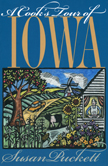
A Cook's Tour of Iowa
by Susan Puckett
Bur Oak Book

"This book may shock the food snobs of America because Iowa's down-home cuisine is not dull after all."--Des Moines Register

"…a combination oral history and cookbook which should delight aficionados of Americana."--Cookbook Digest

"Puckett tapped into the culture of America's Middle West and the result is a book that will give Iowans cause for pride."--World of Cookbooks

Regular Price: $23.00
Sale Price: $5.00

Friday, November 1, 2013

Midwest Nature Quote of the Week

Many species of sunflowers, asters, and goldenrods bring up parade’s end in September and early October, some flowering well after the first autumn frost. Canada goldenrod, with a plumelike flower head, and rigid goldenrod, with a flat-topped flower head, are two of the most common species. Four species of asters are often abundant in central Iowa.


Wednesday, October 9, 2013

Interview Lawrence L. Rettig: part 3

Lawrence L. Rettig is the author of Gardening the Amana Way, which will be released this month. University of Iowa Press editor Holly Carver asked him a few questions about the upcoming book. Here's the last section of our interview with him.

HC: Tell us more about your seed bank.
LLR: The seven plant varieties in our bank were all grown in pre-1932 Amana communal kitchen gardens. Seed for each of these varieties was brought from Germany first to the Ebenezer settlements in New York (beginning in 1843) and subsequently to the Amana Colonies. There were many other vegetable varieties in communal Amana kitchen gardens. Unfortunately, they were no longer grown when we returned to the Amanas in the late 1970s. Here are the varieties we found and continue to preserve.

Amana radish (Vielfarbiger Rettich): With two sowings, this radish provides both a spring and a fall crop. It’s a fairly large, mild variety that has amazing storage qualities. A fall harvest will keep in a refrigerator’s crisper until the following spring. Some local families still break out the radishes on January 1 to celebrate the new year.

Amana string bean (Grüne Bohnen): Typical of many European varieties, this green string bean is flat, as opposed to its more rounded American counterpart. Its flavor is delicious and superior to that of any other variety we’ve tried. It dries well and can be stored this way for rehydration and consumption during the winter.

Celeriac (Knollecellerie): Celeriac, or root celery, is still a popular vegetable in Europe and has enjoyed increasing popularity in the United States recently. It’s a celery that is grown not for its stalks but for its bulbous root, which has a mild, pleasing celery flavor and is used raw in salads or cooked in soups. The stalks are small, strong-tasting, stringy, and generally unpalatable.

Citron melon (Zitter): Looking for all the world like miniature watermelons, citrons are bound to disappoint anyone who attempts to eat one raw. The flesh is hard, white, and practically tasteless. Citrons are eaten primarily in a pickled form, with the dominant flavoring usually that of cloves and cinnamon.

Lettuce (Eiersalaat “egg lettuce”): This unique leaf lettuce variety is known locally as egg lettuce, because it was usually served in communal kitchens with chopped hard-boiled egg in the dressing. The leaves are almost completely yellow in color, very tender, with a slight buttery flavor and texture. Other advantages include heat resistance, slowness in bolting, and retarded development of bitterness.

Ebenezer onion (Zwiwwel): A popular onion in the Northeast and Upper Midwest because of its winter keeping qualities, it was introduced by the Amana Inspirationists during their sojourn at Ebenezer, New York. Huge surpluses in the Ebenezer kitchen gardens resulted in the sale of this onion on the nearby Buffalo, New York, market. Its popularity was quickly established because of its superb keeping qualities.

European black salsify (Schwarzwurzel): Schwarzwurzel (“black root”) is still a popular vegetable in German gardens today. Amana folks prepared it by scraping the black skin from the root (in carrot fashion) and simmering it in water or stock, perhaps with onions, the liquid being thickened to a sauce before serving. The flavor is unique, mild, and delicious, quite unlike the American salsify or oyster root.

HC: What gardens do you like to visit in Iowa?
LLR: Reiman Gardens, Iowa State University, Ames, tops the list. The rest are in no particular order of preference: Better Homes and Gardens Test Garden, Des Moines; Dubuque Arboretum and Botanical Garden; Iowa Arboretum, Madrid; Seed Savers Exchange, Decorah; Brucemore, Cedar Rapids; Living History Farms, Urbandale; and Noelridge Greenhouse and Park, Cedar Rapids.

HC: ou are definitely an expert in all things gardening. But I bet that you learned something from writing this book. What did you learn?
LLR: I think the most important thing, personally, concerns the trellises that still grace the south and west walls of many Amana residences. Their purpose and origin are often among the first inquiries I get from visitors. Their purpose is well established. They provide shade during the summer to keep residences a bit cooler, and the grapevines that grew on them (and in some instances still do so today) provide food. But no one seemed to know how their construction and use came about. I found the smoking gun. I’m a bit of a tease, so you’ll have to read the book to discover their source.

I also realized for the first time how powerful a flower can be in facilitating social change. I’m speaking here of the lotus lily that somehow showed up once the Lily Lake had formed. Its grand display in July and August drew hordes of visitors to Amana—up to 1,500 on a Sunday—breaching the comparative isolation of Old Amana in the 1920s. Young members of the community waded into the lake to pick lily bouquets and sold them to eager tourists, which provided pocket money that members were not supposed to have. This so raised the ire of Amana elders that they threatened to annihilate the lilies. Eventually they relented, but the course toward the Great Change and an end to communal living had been set.

Beyond trellises and lotuses, it was a great joy to learn the details of how communal Amana gardened. I was especially impressed with the organizational skills involved and how smoothly the production and preparation of food were carried out.

HC: What advice would you give to budding authors who want to focus on gardening?
LLR: Write from experience whenever possible. If you’re going to write about a plant, grow it. If you’re going to write about techniques, be sure you’ve mastered them. Always keep your target audience in mind. Speak to them. Consider joining the Garden Writers Association (www.gardenwriters.org). Their mentoring program is outstanding. They have a great database of authors you can contact for advice.

Gardening the Amana Way by Lawrence L. Rettig

Friday, September 27, 2013

Midwest Nature Quote of the Week

I have spent forty years in the basin of the Upper Iowa, a stream that winds from the flat farm fields of southern Minnesota through the wooded valleys of northeastern Iowa to the Mississippi. As a child I fished and swam in the river. As an adult I cross the river every day. My office overlooks the river, winding out of sight in two directions; with my windows open on warm days, I hear the raspy crowing of pheasant cocks in tall grasses along the river’s bank. On the map, the Upper Iowa is a blue line that, together with the crossing of two state highways, explains the position of the town I call home.   

David S. Faldet, Oneota Flow: The Upper Iowa River and Its People


Wednesday, September 25, 2013

Iowa vs Iowa State Photo from 1919

In Iowa City, the Cyclones and the Hawkeyes clash on the gridiron; postcards probably sold well each year to alumni and students on the winning side. 


Monday, August 19, 2013

Raptor of the Week: Burrowing Owl

Burrowing Owl
Athene cunicularia

The burrowing owl is a Great Plains species that rarely nests in Iowa, and these nests, as expected, are mostly in the western half of the state. It is our only owl that nests underground. In its principal range, it uses prairie dog burrows for its nest; in Iowa, it probably uses badger dens.


The Raptors of Iowa, paintings by James F. Landenberger

Friday, August 16, 2013

Midwest Nature Quote of the Week

As we swing around the bend, the water suddenly swarms with a shoal of redhorse suckers that arch and dive in a shadowy tumble. Suddenly, though, the fish are gone and the canoe crunches to a stop against a sheet of ice. Jabbing hard, I do nothing except chip a large notch out of my wooden paddle. The ice remains uncracked, stretching out before us for hundreds of feet. This, then, is the end of our trip: trapped by the current against an immobile sheet of ice too thick for us to break but too thin to support our walking weight. What made us think we could canoe a partially frozen river?


Wednesday, August 14, 2013

Excerpt 6 from STATE FAIR by Phil Stong

Abel Frake smiled. By deliberately snapping off his sense of direction he could almost imagine that he was driving, as he had been driving seven days before, to the carnival--to the Fair. There was Blue Boy murmuring objections at every pit in the road; there was the sleeping family; there was the yellow roadway with its fringe of varying shadow; there was the crackling mist of light which was the universe, spread out over Abel Frake at regular intervals, and over Blue Boy, the finest Hampshire stud boar in the world.

That, of course, ended the illusion and with surprise Abel Frake realized that he was glad that he was not going to the Fair--that he was going home. He was gorged with the excitement and the triumphs of that strange place; reality, as he had made it for himself, pleased and satisfied him. The Frakes had stepped for a moment into a fantasy; now, unchanged, they were returning to that five hundred acres where only birth and death--not even marriage--had been the only changes for four generations.


State Fair, by Phil Stong


Monday, August 12, 2013

Excerpt 5 from STATE FAIR by Phil Stong

Even on Friday the glory of Blue Boy's triumph had not died out. The horse-show had come, and was going that night, but the grandeur that was Blue Boy, somehow, picked up by the Des Moines Register and the Tribune, had lingered over every stock section of the Fair.

For some reason, Blue Boy had been build up by the two papers to the stature of a Middle Western hero. Did you think of Governor Drake, of Tama Jim Wilson, of doddering Senator Allison, or Gullible Cummins, of Lillian Russell and Senator Copper King Clark--you thought also of Blue Boy. And Iowa's litterateurs--Rupert Hughes, Lewis Worthington Smith, Herbert Quick, Emerson Hough, Susan Glaspell, Ellis Parker Butler--why, was not this last author's greatest achievement called "Pigs is Pigs"?

Abel wondered a little, even in the greatest glow of his triumph, at the sudden fame which had come to Blue Boy. Even in Chicago papers they had shown the boar's picture with the caption, "The World's Greatest Hog." That hardly seemed reasonable, though Abel knew that the fact was a fact. Still, he saw no good reason why the country should be stirred by prospects of cheaper pork. Sport was sport, but pigs, it was true, were pigs.

State Fair, by Phil Stong


Friday, August 9, 2013

Excerpt 4 from STATE FAIR by Phil Stong

There was one man in the car, a young man, who wearily waved a small card at the loader. Margy caught a glimpse of the card and recognized a miniature reproduction of a logotype she saw every day, the masthead of the Des Moines Evening Tribune. With awe she realized that she was about to occupy a car with the Press.

The Press was a young man of twenty-seven or eight, with sleepy eyes, a  pleasant, not unattractive face, and a faint smile. His suit, of light gray tweed, set off a well-browned face and picked up hair of platinum blond for which any chorus-girl would have given her soul a dozen times over. He had evidently been around the world hundreds of times, had tired of wine, women, and song, and had taken up roller-coastering as an End in Life.

Margy took a seat demurely in the place to which the attendance beckoned her, at the young man's side. The bar was dropped over their laps and the car started, slowly.

Before they had gone twenty feet, Margy realized that she was not riding on the roller-coaster of the previous year. The first climb was tremendous, was mountainous. She felt a faint alarm. The young man lay back, relaxed, inspecting the Fair Grounds from the increasingly advantageous heights. He took out a cigarette, looked at it critically, and put it back in his pocket. Margy smiled and nodded at the cigarette. He thanked her with a glance, but shook his head.

The next moment they fell ninety feet.


State Fair, by Phil Stong


Wednesday, August 7, 2013

Excerpt 3 from STATE FAIR by Phil Stong

Only Abel felt the dews which came toward morning and saw the trees faintly begin to silhouette themselves against a dawning gray light. A little later he could see the sunrise from the side door of the truck, and then he began to hear a rising chorus of farm animals from the farms which drifted by the car. Only Abel saw the freshly gilded dome of the Capitol suddenly shine out over Des Moines, and the newly whitewashed Fair Buildings which promised them carnival from the near side of the town. At the gates he halted and showed a sleepy watchman his entry slip for Blue Boy. Mrs. Frake started up.

"Wake up, children," she cried, "wake up! We're here! We're at the Fair!"


State Fair, by Phil Stong

Come see the University of Iowa Press at the State Fair this year on opening day, tomorrow, from 3:00pm - 9:00pm!

Monday, August 5, 2013

Excerpt 2 from STATE FAIR by Phil Stong

Along the wall of Melissa Frake's kitchen at home was a long row of yellow and red ribbons which she had won for angel's food, devil's food and layer cake; cherry preserves made by the old Stidger recipe which had come down in the family for generations uncounted; for chicken dressing; for raised bread; for doughnuts. There were two blue ribbons--one for candied cherries and one for a mincemeat to which Mrs. Frake had surreptitiously added some sherry wine the doctor had once prescribed as a tonic for Margy.

The little bit that was left over, it seemed a shame to waste. The judges awarded Mrs. Frake's mincemeat a blue ribbon with a promptness and unanimity which had shocked her. Although she felt a very small twinge of conscience when she saw this blue ribbon, she felt a slight moral indignation against judges whose souls would not warn them of irreligious matters in mincemeat.


State Fair, by Phil Stong

Come see the University of Iowa Press at the State Fair this year on opening day, August 8, from 3:00pm - 9:00pm!

Friday, August 2, 2013

Excerpt 1 from STATE FAIR by Phil Stong

The whole farm was crackling with preparation. The Hired Man had not marcelled Blue Boy, but only because the curl of the hair was not a judging point. He had manicured him; he had viewed more critically than a Corot the misty sunrise tint of his snout; no Park Avenue specialist knew one half about any dowager's bowels what the Hired Man knew about Blue Boy's--in addition, the Hired Man was pleased with what he knew; Blue Boy's coat was curried and rubbed to enameled perfection; Blue Boy's tail was curled so tightly that its tension would have alarmed uninformed persons; Blue Boy, as he lay and rocked upon his four legs, was the finest creature of his species that had ever existed in time and space.

State Fair, by Phil Stong

Come see the University of Iowa Press at the State Fair this year on opening day, next week, from 3:00pm - 9:00pm!