Showing posts with label curry. Show all posts

Friday, November 8, 2013

Chingri Maach Malai Curry (Shrimp Curry Cooked in Coconut Milk)

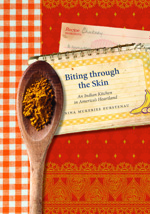
Check out this delicious recipe from Nina Furstenau's book, Biting through the Skin: An Indian Kitchen in America's Heartland!

Serves 8

2 tablespoons vegetable oil
1 bay leaf
45 whole cloves
1 piece cinnamon stick, 1 1/2 inches long
4-5 cardamom pods
1 onion, cut in half lengthwise and then very finely sliced
1 teaspoon cumin powder
1 teaspoon coriander powder
1/21 teaspoon turmeric powder
1/2 teaspoon cayenne powder (or to taste)
2 pounds shrimp peeled, and deveined
1 14-ounce can coconut milk
1/4 cups raisins
1/2 cup peas
1 teaspoon salt (or to taste)
1/2 teaspoon sugar
1 inch fresh ginger, grated, or 1/2 teaspoon ginger powder
garam masala (optional)

Heat oil in a heavy pot and add bay leaf, cloves, cinnamon, and cardamom. Let the whole spices sizzle for 10 seconds. Add sliced onions and fry until light brown. Drain excess oil. Add cumin, coriander, turmeric, cayenne, and a small amount of water to keep mixture from burning. Cover and simmer for 5 minutes. Add shrimp and peas and stir. Cover and cook for 34 minutes. Add coconut milk, raisins, salt, sugar, and ginger. Simmer until heated through. Sprinkle with garam masala if desired and serve.

Biting through the Skin: An Indian Kitchen in America's Heartland, by Nina Mukerjee Furstenau

Wednesday, September 18, 2013

Interview with Nina Furstenau: part 2


Nina Mukerjee Furstenau is the author of Biting through the Skin: An Indian Kitchen in America’s Heartland, just published this month. University of Iowa Press editor Catherine Cocks asked her a few questions about the book and her experience growing up in Pittsburg, Kansas, in the 1960s and 1970s.

CC: You note in the book that it was hard to find the basic ingredients for Indian food in small-town Kansas in the 1960s. Today a far wider range of foods appears in grocery stores and there are restaurants specializing in many different cuisines. Do you think this greater variety affects the way immigrants and native-born Americans interact with each other now?
NF: I like to think so. As people are exposed to cultures through food, perhaps the avenues to greater understanding are widened. It’s hard to be completely alienated from a culture when you love its food.

CC: Why did you decide to join the Peace Corps after college?
NF: I wanted to help people. I feel strongly that this drive stemmed from watching a young boy in India begging for food. I was six, he was younger than me and had such a different life. The memory of how he reached out to catch a banana I threw him and how, in order to eat it before the older children could take it away, he bit through bitter peel, was the catalyst for so many things in my life, including the book. Of course, I also joined Peace Corps because it sounded fun and I wanted to see and explore the world.

CC: Of the recipes you include in the book, which one would you recommend as a good place to start for someone who’s never made Indian food before?
NF: I would try chicken curry. It’s easy, delicious, and incorporates all the traditional flavors of Bengal: cardamom, cloves, cinnamon, ginger, and bay. Be patient, let it simmer in its spices, and the aroma will enfold your kitchen, maybe your heart.

Murgi (Chicken Curry)
Serves 4

Take 1 whole chicken, skin, cut into pieces, and set aside (or use boneless, skinless chicken pieces, cut into approximately 1 x 2-inch pieces). One pound cubed lamb or beef can also be used.

2–3 tablespoons oil
4 whole cloves
1/2 stick cinnamon
4 whole cardamom pods
1 bay leaf
1 dried red chili pepper
1/4 teaspoon sugar
2 medium onions, chopped
1/2 teaspoon powdered ginger, or about 1 inch of fresh ginger root, mashed
1/41/2 teaspoon cayenne
1/4 teaspoon turmeric salt to taste
1/4 teaspoon fresh garlic, mashed
1/2 cup yogurt or sour cream or 1/2 of a medium tomato
1/4 teaspoon garam masala (optional)

Cover the bottom of a heavy pan with vegetable oil and heat. When hot, drop in the whole spices and let sizzle for about 30 seconds. Add the onions and stir-fry until the onions begin to brown at the edges. Push them to the side and add the sugar. Stir the sugar in the hot oil until it begins to caramelize and is mostly dissolved. Put in the cut-up chicken pieces. Stir-fry the chicken with the onions until the chicken begins to turn brown. Add the ginger, cayenne, garlic, and salt. Lower heat, add a little water if necessary, and fry until the meat is well coated with the spices (20–25 minutes—this long simmer is essential to bring out the flavor of the finished dish). Add about 1 cup water. Loosely cover the pan and simmer until heated through (5 minutes). Add yogurt, sprinkle a little garam masala into  the pan if you have it, and simmer an additional 5–10 minutes. Serve hot.