Showing posts with label food. Show all posts

Wednesday, March 5, 2014

Interview with Jenifer Angerer of New Pioneer Co-op, pt. 1

New Pioneer Co-op has been providing the Iowa City corridor with fresh, organic, and locally grown food since 1971. For decades, they have paved the way for other Iowa markets interested in providing their own communities with local, organic food. Today, New Pi has expanded to be more than just a grocery store. The market has grown, and New Pi plans to open a new store in Cedar Rapids early next year. The University of Iowa Press asked Jenifer Angerer, the marketing manager, some questions about the expansion, what New Pi offers its members, and the future of buying local and organic.
The original New Pioneer Food Co-op, image from Facebook
New Piooner has expanded to more than just a market. It also encompasses a newsletter, blog, classes, membership, and more. What are some of the most unusual additions to New Pi? What inspired this expansion?
New Pioneer Food Co-op believes that, beyond providing local and organic groceries, supporting the local economy and enhancing our member-owners’ community is one of our primary roles. We accomplish this through our many outreach programs, including, as you noted, cooking classes, gardening classes, and our Soilmates education program, which provides free K-12 education about gardening, composting, and feeding the soil.
New Pi also hosts a community garden for our member-owners called Earth Source Gardens, which is open to the public for educational garden parties each summer. Not only do member-owners get an opportunity to plant their own garden, but they can learn more about gardening and soil management and also have the opportunity to give back to the community by donating their extra produce to the Crisis Center Food Bank.
We continue to expand ways that we can provide community education on organic and local foods, including through our email newsletter, social media (Facebook, Instagram, Twitter, and Pinterest), and our food blog, New Pi Eats.
New Pioneer has been incorporated as a cooperative business since 1971, which means we operate differently than a regular profit-driven business. As a cooperative grocery, we’re owned democratically by our member-owners (who each purchase a lifetime share in the company for $60), and are driven by the Seven Cooperative Principles:
1. Voluntary and Open Membership: 
Cooperatives are voluntary organizations, open to all people able to use its services and willing to accept the responsibilities of membership, without gender, social, racial, political, or religious discrimination.
2. Democratic Member Control
: Cooperatives are democratic organizations controlled by their members—those who buy the goods or use the services of the cooperative—who actively participate in setting policies and making decisions.
3. Members' Economic Participation: 
Members contribute equally to, and democratically control, the capital of the cooperative. This benefits members in proportion to the business they conduct with the cooperative rather than on the capital invested.
4. Autonomy and Independence: 
Cooperatives are autonomous, self-help organizations controlled by their members. If the co-op enters into agreements with other organizations or raises capital from external sources, it is done so based on terms that ensure democratic control by the members and maintains the cooperative’s autonomy.
5. Education, Training, and Information: 
Cooperatives provide education and training for members, elected representatives, managers, and employees so they can contribute effectively to the development of their cooperative. Members also inform the general public about the nature and benefits of cooperatives.
6. Cooperation among Cooperatives: 
Cooperatives serve their members most effectively and strengthen the cooperative movement by working together through local, national, regional, and international structures.
7. Concern for Community: 
While focusing on member needs, cooperatives work for the sustainable development of communities through policies and programs accepted by the members.
Grinnell Heritage Farm at New Pioneer Co-op, image from Facebook
After many years exclusively in the Iowa City area, you have announced that you will be opening a location in Cedar Rapids. When does the new store plan to be open? How will this new store be different from the Iowa City and Coralville locations? Do you hope to expand beyond the corridor in the future?
We’re very excited to fulfill our member-owners’ long-time request for a Cedar Rapids store. We have submitted our site plan for the Cedar Rapids store to the City of Cedar Rapids and are awaiting its approval (a process that can take over a month), which governs the schedule of the rest of the work that follows. Once the site plan is formally approved, then we will be in a position to finalize the project schedule and announce an opening date. Our Board of Directors bases any decision to relocate or expand to new locations on what is most economically prudent for the Co-op.

Wednesday, February 12, 2014

Interview with Preston Moore of NewBo City Market, pt. 2

The NewBo City Market is a year-round indoor and outdoor market located in the New Bohemia District in Cedar Rapids, Iowa. Since its opening in 2012, the market has been selling local and homegrown foods, arts, and crafts, as well as putting on events for the community. Due to new interest in organic food and local businesses, the NewBo City Market has been bustling each day since its opening. We talked to Preston Moore, Director of Marketing & Special Events at NewBo, about the market, local food, and the future of city markets.


Tell us a little about your Learning Garden. What's growing there now?

Right now, the only thing growing in the learning garden is the number of inches of snow spilling over the top of the raised beds. 

Joking aside, the Learning Garden is a tremendous asset to the market. This past summer, a Master Gardener was on site each Saturday to teach children (and even some grownups) about where food comes from and how to care for grown food. You can see a list and description of the items that were grown in 2013 here: http://newbocitymarket.com/about/learning-garden/.


What do you think is the future for local food markets like NewBo?

I think as we look to the future, places like NewBo City Market are going to be opening up shop everywhere. The desire for fresh, locally produced food (both whole foods and prepared) has grown by leaps and bounds in recent years. I only see that desire expanding. I don't exactly know what the future holds for markets like ours, but our entire existence is based on the mission of helping the public gain access to quality and fresh foods. With that said, I think we're in store for a very successful future.


Can you tell us about any similar markets in the Midwest for readers who might not be close to Cedar Rapids?

More and more are opening every day. There's a public market in Milwaukee, WI; Columbus, OH; Lincoln, NE; Detroit, MI... the list really goes on and on. I can't stress how important public markets are to local economies and small businesses, so if any of your readers are anywhere close to one, I strongly encourage them to take an afternoon to check it out! (And if any of them are ever in Cedar Rapids, I'd love for them to swing by NewBo City Market and say hello.)

Wednesday, February 5, 2014

Interview with Preston Moore of NewBo City Market, pt. 1


The NewBo City Market is a year-round indoor and outdoor market located in the New Bohemia District in Cedar Rapids, Iowa. Since its opening in 2012, the market has been selling local and homegrown foods, arts, and crafts, as well as putting on events for the community. Due to new interest in organic food and local businesses, the NewBo City Market has been bustling each day since its opening. We talked to Preston Moore, Director of Marketing & Special Events at NewBo, about the market, local food, and the future of city markets.

Despite being located in downtown Cedar Rapids, which is still recovering from the 2008 floods, the NewBo City Market has thrived. What do you think are the biggest factors contributing to NewBo's success?

Cedar Rapids as a whole has come a long way since the floods of 2008. Parts of town have recovered much more quickly than others, and NewBo City Market is very fortunate to be in a neighborhood that has rebounded with what I would consider to be considerable speed. The biggest single factor that has contributed to the success of the market has honestly been its people. From its very inception, NewBo City Market has had the support of some very passionate people--and as with most successful projects, our passionate people were loud and ardent advocates for our existence. We simply wouldn't be here (even in the form of an idea) without the support of those that truly wanted the market to be here.


Local markets and food have been rapidly growing in popularity. How do they benefit communities? How does NewBo benefit Cedar Rapids?

Public markets have always served a wide variety of purposes in their communities. A trend that has popped up in recent years is the development of public markets in towns/areas that have, for whatever reason, faced a decline. Our neighborhood's decline was a literal one due to the 2008 flood, but other communities' issues aren't always as transparent. In the case of Cedar Rapids, and more specifically our neighborhood, I think the main benefit of NewBo City Market is that we have encouraged economic and community growth. It's hard to ignore a bright red 20,000-square-foot building that takes up an entire square block. People who had been eyeing this neighborhood as a potential launching point for their businesses took note of the success our market was experiencing and said to themselves, "This neighborhood will work." There is a sense of stability here that we aren't entirely responsible for, but I certainly believe we contributed to.


NewBo is more than just a city market; it's part of the New Bohemia neighborhood. What is the atmosphere New Bohemia tries to create? How does the market play a role in that?

The general atmosphere of any Bohemian neighborhood is driven by artists and creators. Our neighborhood is home to galleries that house some of the greatest artists in the Midwest. We also have what are arguably the most visited restaurants, bars, and shops in the downtown area. I think NewBo City Market plays a role in that by giving our merchants and vendors a space to "test the waters," so to speak. Our vendors and merchants are the smallest of small businesses, and without a space like the market, some of them would have never have gotten off the ground. We're very fortunate to have a the space we do in that sense.

We also work hard to partner with other organizations in the community, as well as artists and musicians, to make sure everyone who wants visibility is able to get it. We see jugglers, balloon artists, dancers, gymnasts, and a wide array of street artists visit the market every single week. We love being the sort of "town square" that those people need in order to gain exposure.

Check back next week for the second part of this interview!

Wednesday, January 1, 2014

Mangsho (Aromatic Lamb Curry with Potatoes) recipe

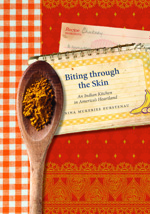
Happy New Year! To celebrate, why not try a new Indian dish from Biting through the Skin by Nina Furstenau?

Mangsho (Aromatic Lamb Curry with Potatoes)

Serves 68

8 tablespoons vegetable oil
1 large onion, finely chopped
1/2 to 1 green chili, finely chopped
6 cloves garlic, minced
2 pounds lamb (beef can be substituted), boned and cut into  1-inch cubes
2 tomatoes, chopped, or (1) 14-ounce can of tomatoes
1 tablespoon ground cumin
1 tablespoon ground coriander
1/2 teaspoon ground turmeric
1/4 to 1 teaspoon cayenne pepper
2 teaspoons salt
1 pound medium potatoes, peeled and cut in chunks
2 1/2 cups water
1 bunch cilantro, chopped, stems discarded

Heat the oil in a large, heavy stockpot over high heat. When hot, put in the onion and stir-fry until the onions begin to brown. Add the green chili and garlic. Put in the meat and stir-fry for 5 minutes. Put in the tomatoes, cumin, coriander, turmeric, cayenne pepper, and salt. Continue to cook on high heat for 1015 minutes, stirring frequently. Add the potatoes and the water. Add the cilantro. Cover, leaving the lid slightly ajar, and cook on low heat for about 1 hour and 10 minutes (1 1/2 hours for beef).

Biting through the Skin: An Indian Kitchen in America's Heartland, by Nina Mukerjee Furstenau

Wednesday, December 11, 2013

Give an Iowa Cookbook this Season!

Still holiday shopping? The University of Iowa Press is currently holding our annual holiday sale. We've got great books covering a wide range of topics and interests for up to 65% off. Buy some for your loved ones or buy some for yourself!

Here are just a few of the books that are on sale now…

Gardening the Amana Way
by Lawrence L. Rettig
Bur Oak Book

As a child of parents who were part of the communal life of the Amana Society, Larry Rettig pays homage to the Amana gardening tradition and extends it into the twenty-first century and extends his gardening advice into the kitchen. He shares family recipes for radish salad, dumpling soup, Amana pickled ham, apple bread, and more!

Regular Price: $27.50
Sale Price: $15.00

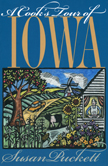
A Cook's Tour of Iowa
by Susan Puckett
Bur Oak Book

"This book may shock the food snobs of America because Iowa's down-home cuisine is not dull after all."--Des Moines Register

"…a combination oral history and cookbook which should delight aficionados of Americana."--Cookbook Digest

"Puckett tapped into the culture of America's Middle West and the result is a book that will give Iowans cause for pride."--World of Cookbooks

Regular Price: $23.00
Sale Price: $5.00

Friday, November 8, 2013

Chingri Maach Malai Curry (Shrimp Curry Cooked in Coconut Milk)

Check out this delicious recipe from Nina Furstenau's book, Biting through the Skin: An Indian Kitchen in America's Heartland!

Serves 8

2 tablespoons vegetable oil
1 bay leaf
45 whole cloves
1 piece cinnamon stick, 1 1/2 inches long
4-5 cardamom pods
1 onion, cut in half lengthwise and then very finely sliced
1 teaspoon cumin powder
1 teaspoon coriander powder
1/21 teaspoon turmeric powder
1/2 teaspoon cayenne powder (or to taste)
2 pounds shrimp peeled, and deveined
1 14-ounce can coconut milk
1/4 cups raisins
1/2 cup peas
1 teaspoon salt (or to taste)
1/2 teaspoon sugar
1 inch fresh ginger, grated, or 1/2 teaspoon ginger powder
garam masala (optional)

Heat oil in a heavy pot and add bay leaf, cloves, cinnamon, and cardamom. Let the whole spices sizzle for 10 seconds. Add sliced onions and fry until light brown. Drain excess oil. Add cumin, coriander, turmeric, cayenne, and a small amount of water to keep mixture from burning. Cover and simmer for 5 minutes. Add shrimp and peas and stir. Cover and cook for 34 minutes. Add coconut milk, raisins, salt, sugar, and ginger. Simmer until heated through. Sprinkle with garam masala if desired and serve.

Biting through the Skin: An Indian Kitchen in America's Heartland, by Nina Mukerjee Furstenau

Thursday, November 7, 2013

Nina Furstenau: reading and presentation

This event has been rescheduled for March 8.

Nina Furstenau will be reading and presenting from her book, Biting through the Skin: An Indian Kitchen in America's Heartland, this Saturday at the Chicago Foodways Roundtable.

Reading
Date: Saturday, November 9
Time: 10:00 A.M.
Place: Kendall College, 900 N. North Branch Street, Chicago, Illinois

If you plan on attending, please join our Facebook Event!

Praise for Biting through the Skin
"A beautiful and sensitive memoir--with recipes!--about life in Kansas for a Bengali family."--Star Tribune

Biting through the Skin: An Indian Kitchen in America's Heartland, by Nina Mukerjee Furstenau

Wednesday, October 16, 2013

Interview with Douglas Bauer


Doug Bauer is the author of What Happens Next? Matters of Life and Death, just published this month. University of Iowa Press acquisitions editor Catherine Cocks asked him a few questions about the book.

CC: What’s behind the title, What Happens Next?
DB: First, I simply liked the common application: the question a reader continuously asks as a story unfolds. But there’s also the far more essential story of one’s life unfolding. Here, it’s age that increasingly becomes the story teller, the omniscient narrator, supplying the plot surprises. Obviously, we’re not the reader of this story. We’re the main character, who asks even more imperatively, “What happens next?”

CC: Woven throughout these pages are what you call the “dual calendars” of your own mortality and that of your aging parents. What did you figure out about the experience of growing older that might help others in the same situation?
DB: As we age, we are increasingly two separate selves—our internal self, which has at least the chance to remain what I’ll call “youthful,” staying alive to learning, to experience, and so forth; and the physical self, which does not have that chance. (I sometimes think of the body I see when I look in the mirror as some terribly unfortunate costume I’ve been forced to wear over my actual body.) The more we’re able to accept that separation, the better the possibility of accepting the terms that time ruthlessly insists on. So much easier said than done.


CC: You had a wonderful mentor in renowned food writer M.F.K. Fisher. How you come to meet her?
DB: I describe our meeting in “What We Hunger For,” one of the sections of the book. She was assigned by Playboy magazine, where I‘d recently been hired in the early ‘70s, to go to New Orleans and write about the food. We spent a magical week eating and talking and wandering the city, during which I gained seven pounds and she, as she claimed in a follow-up letter, lost about the same amount. But I gained much more than weight. I gained her unlikely—I was twenty-six and she was sixty-two—and irreplaceable life-long friendship.

CC: Quite a lot of food writing today (like Michael Pollan’s latest, Cooked) celebrates cooking and mealtimes as occasions for bringing fragmented modern families together. In What Happens Next, though, you show how both can express tensions in a family that seems outwardly to embody the ideal we are being urged to strive for. What should we make of this apparent contradiction?
DB: As M.F.K. Fisher’s writing pioneered, food and eating can be used metaphorically to talk about other matters in the lives of those doing the eating. A section of my book, “What Was Served,” uses the daily meal my mother served my father, grandfather, and me as a boy as a way of writing about the family’s history and the tensions that were also being silently, invisibly “served” with the food, passed around the table. And in another sense, my mother was “serving” me, that is, was acting in the service of my well-being, by keeping me ignorant of family difficulties.

What Happens Next? Matters of Life and Death by Douglas Bauer

Wednesday, September 18, 2013

Interview with Nina Furstenau: part 2


Nina Mukerjee Furstenau is the author of Biting through the Skin: An Indian Kitchen in America’s Heartland, just published this month. University of Iowa Press editor Catherine Cocks asked her a few questions about the book and her experience growing up in Pittsburg, Kansas, in the 1960s and 1970s.

CC: You note in the book that it was hard to find the basic ingredients for Indian food in small-town Kansas in the 1960s. Today a far wider range of foods appears in grocery stores and there are restaurants specializing in many different cuisines. Do you think this greater variety affects the way immigrants and native-born Americans interact with each other now?
NF: I like to think so. As people are exposed to cultures through food, perhaps the avenues to greater understanding are widened. It’s hard to be completely alienated from a culture when you love its food.

CC: Why did you decide to join the Peace Corps after college?
NF: I wanted to help people. I feel strongly that this drive stemmed from watching a young boy in India begging for food. I was six, he was younger than me and had such a different life. The memory of how he reached out to catch a banana I threw him and how, in order to eat it before the older children could take it away, he bit through bitter peel, was the catalyst for so many things in my life, including the book. Of course, I also joined Peace Corps because it sounded fun and I wanted to see and explore the world.

CC: Of the recipes you include in the book, which one would you recommend as a good place to start for someone who’s never made Indian food before?
NF: I would try chicken curry. It’s easy, delicious, and incorporates all the traditional flavors of Bengal: cardamom, cloves, cinnamon, ginger, and bay. Be patient, let it simmer in its spices, and the aroma will enfold your kitchen, maybe your heart.

Murgi (Chicken Curry)
Serves 4

Take 1 whole chicken, skin, cut into pieces, and set aside (or use boneless, skinless chicken pieces, cut into approximately 1 x 2-inch pieces). One pound cubed lamb or beef can also be used.

2–3 tablespoons oil
4 whole cloves
1/2 stick cinnamon
4 whole cardamom pods
1 bay leaf
1 dried red chili pepper
1/4 teaspoon sugar
2 medium onions, chopped
1/2 teaspoon powdered ginger, or about 1 inch of fresh ginger root, mashed
1/41/2 teaspoon cayenne
1/4 teaspoon turmeric salt to taste
1/4 teaspoon fresh garlic, mashed
1/2 cup yogurt or sour cream or 1/2 of a medium tomato
1/4 teaspoon garam masala (optional)

Cover the bottom of a heavy pan with vegetable oil and heat. When hot, drop in the whole spices and let sizzle for about 30 seconds. Add the onions and stir-fry until the onions begin to brown at the edges. Push them to the side and add the sugar. Stir the sugar in the hot oil until it begins to caramelize and is mostly dissolved. Put in the cut-up chicken pieces. Stir-fry the chicken with the onions until the chicken begins to turn brown. Add the ginger, cayenne, garlic, and salt. Lower heat, add a little water if necessary, and fry until the meat is well coated with the spices (20–25 minutes—this long simmer is essential to bring out the flavor of the finished dish). Add about 1 cup water. Loosely cover the pan and simmer until heated through (5 minutes). Add yogurt, sprinkle a little garam masala into  the pan if you have it, and simmer an additional 5–10 minutes. Serve hot.